
Research.
Innovation and leadership.
Qamcom works with different research projects within areas such as system safety, 6G, AI, and radar.
With expertise across signal processing, wireless communication, AI/ML, control systems and sensing technologies, we drive applied research that solves complex, real-world challenges. Whether leading initiatives or collaborating with partners, we bring system-level thinking, industrial relevance and technical depth.
We work across sectors – from mobility and connectivity to defence, energy and healthcare – and have a strong track record in national and European research programs. Our role spans from early-stage exploration to integration into deployable platforms.
By combining scientific rigour with engineering execution, we make sure research results don’t just stay in theory – but become part of real systems, products and services.

Research areas.



Fields.
Our team of specialists brings years of experience, deep expertise, and a problem-solving mindset, ensuring a holistic perspective across EMC, radar, antenna and radio testing.
6G
AI-powered remote sensing
Radar for automotive applications
Functional safety for autonomous vehicles
Research case studies.
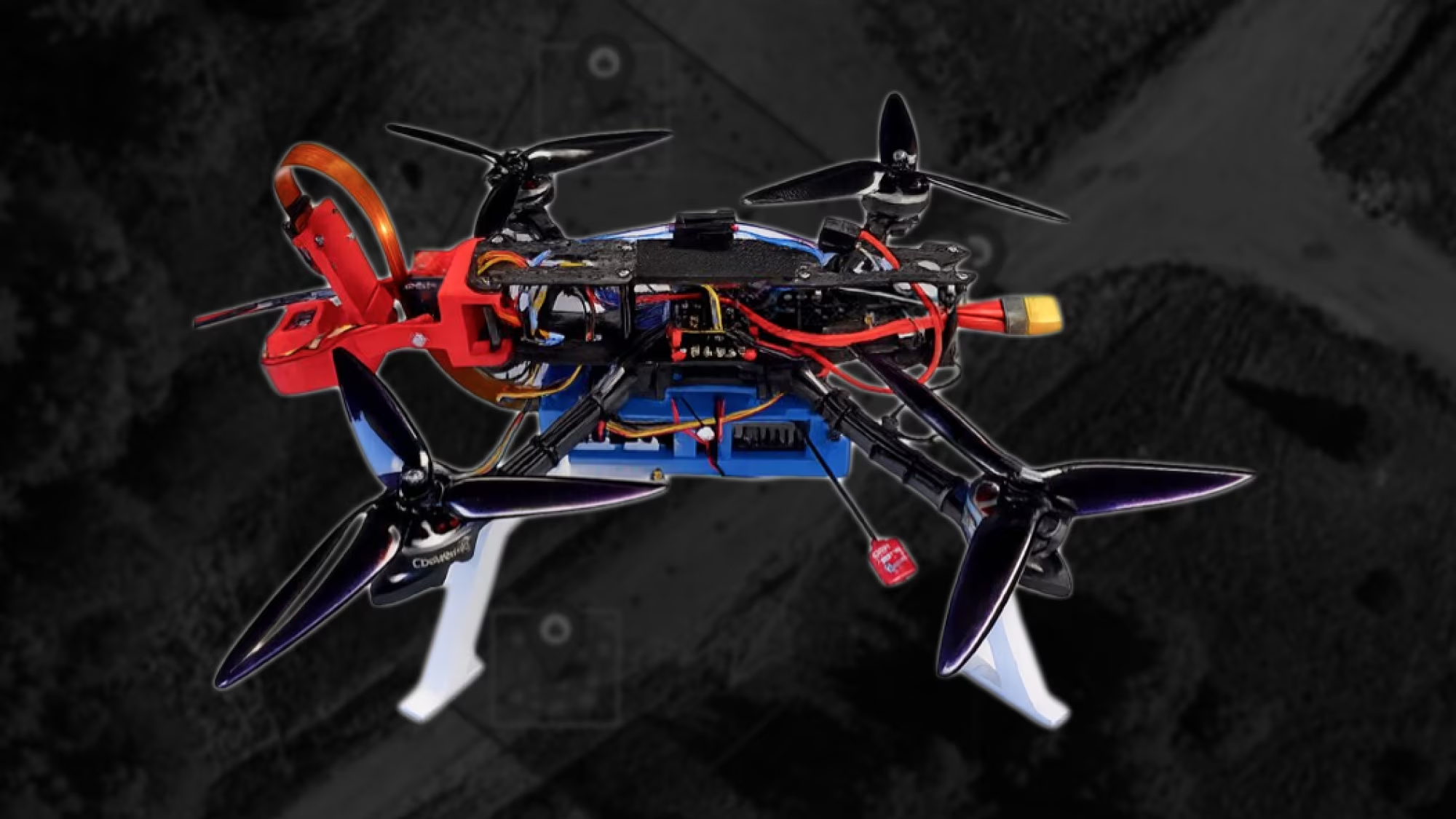
Project Firefly: autonomous drones for early detection of ember fires
Abstract
Ember fires, ignited by burning material carried ahead of a wildfire by wind and heat, are a significant cause of rapid wildfire spread. They are small, scattered over large areas and can become uncontrollable within minutes, so they must be found fast and located accurately. Project Firefly addresses this with a heterogeneous swarm of low-cost, loss-tolerant drones and a ground station. Once the operator has defined the search area, the drones work with no operator in the loop. A leader drone sweeps a wide area with a thermal camera, and a surveyor drone is dispatched to confirm each detection up close. All computation runs onboard, the drones share state through synchronised databases over direct drone-to-drone links, and confirmed fire positions are reported to the ground station.

Why Europe needs open tools to compete in chip design
Custom silicon is increasingly part of the innovation toolbox across industries, but the ecosystem around it is locked behind expensive tools and closed workflows. In this interview, Qamcom's Olof Kindgren explains why open-source silicon is critical to Europe's competitive position — and what it would take to lower the barriers.

Smart routing for smarter wireless networks
As wireless networks shift to higher frequencies and denser topologies, routing data efficiently through the mesh becomes a real performance bottleneck. In this paper, Qamcom researcher Siddhartha Kumar introduces a tree-search algorithm that finds optimal paths through interference-prone networks — delivering 3 to 20 dB signal-quality gains over existing methods.

White Paper: Fault detection within autonomous systems
Autonomous vehicles depend on accurate, reliable positioning — but GPS, lidar, and radar all have blind spots. This whitepaper proposes using Inertial Measurement Units as an independent monitoring system to detect when the primary positioning subsystem is failing, enabling fail-safe interventions before they become safety incidents.

White Paper: Farming-as-a-service
Farming is undergoing a digital transformation, and the AFarCloud project sits at its centre — bringing cloud computing, big data, and machine learning to agriculture. This whitepaper introduces the farming-as-a-service model and the technologies that make it practical for real farms.

White Paper: Autonomous Drive Systems
Bringing self-driving cars onto public roads requires not just better sensors, but a coherent way to architect the decisions a vehicle makes. This whitepaper summarises the state of the art on decision hierarchies and architectural patterns for autonomous drive systems, drawing on results from the ESPLANADE research project.

Qamcom is helping to develop 6G
The race to 6G is already on, and Qamcom has been selected as a partner in the EU-funded Hexa-X project to help lay the groundwork. The company's research will focus on localisation and network optimisation — two areas that will shape the next generation of mobile networks.

Hexa-X
Hexa-X is the European flagship 6G research initiative, working to connect the physical, digital, and human worlds through next-generation wireless. Qamcom contributes research on localisation, sensing, and network optimisation alongside Nokia, Ericsson, and partners across the continent.

Radcom
As automotive radars become ubiquitous, interference between them threatens both performance and safety. The Radcom project investigates how combining radar and communication into one waveform can mitigate that interference — and open the door to new collaborative driving applications.
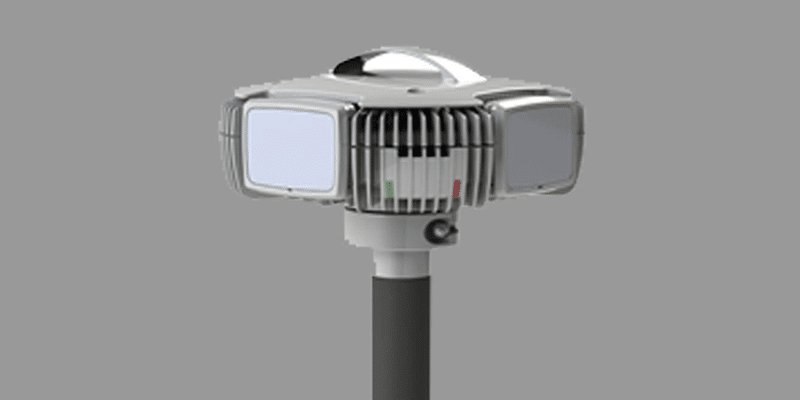
Pandora
Pandora is Qamcom's 60 GHz mesh backhaul solution — a rooftop-mounted radio that builds wireless IPv6 mesh networks with gigabit capacity. With antenna beam steering across 360 degrees and zero-touch installation, it brings powerful wireless broadband to areas where fibre is impractical.


ESPLANADE
Before autonomous vehicles can be allowed on public roads, the industry needs robust methods to assess their functional safety. ESPLANADE set out to build that methodological framework — covering decision hierarchies, architecture patterns, and sensor integrity for both passenger cars and commercial vehicles.

Panorama
The Panorama project explores how to safely integrate heterogeneous embedded hardware and software into mission- and safety-critical autonomous systems. By advancing model-based tooling and timing analysis, the project aims to keep Europe at the forefront of safety-critical embedded development.

AFarCloud
The EU-funded AFarCloud project applies cloud computing, big data, and machine learning to modernise agriculture. By treating farming as a service and enabling cooperative mesh networks of autonomous vehicles, the consortium aims to lift productivity in a sector facing labour shortages and rural depopulation.

5G SimWave
5GSimWave is an open-source waveform simulator originally developed to investigate which waveforms would be suitable for 5G applications at millimetre-wave frequencies. It examines how candidate waveforms hold up against analog impairments like phase noise and non-linearities — and is released under GPL so others can build on it.
Contact us.
